Updated November 1, 2026. General information only, not legal, engineering, or insurance advice.
Before an outage
- Write down what in your home needs power: heat, sump pump, well pump, medical devices, refrigeration. Ready.gov suggests planning for medical devices that need power.
- Install carbon monoxide alarms with battery backup on every level.
- Keep flashlights and batteries ready instead of candles.
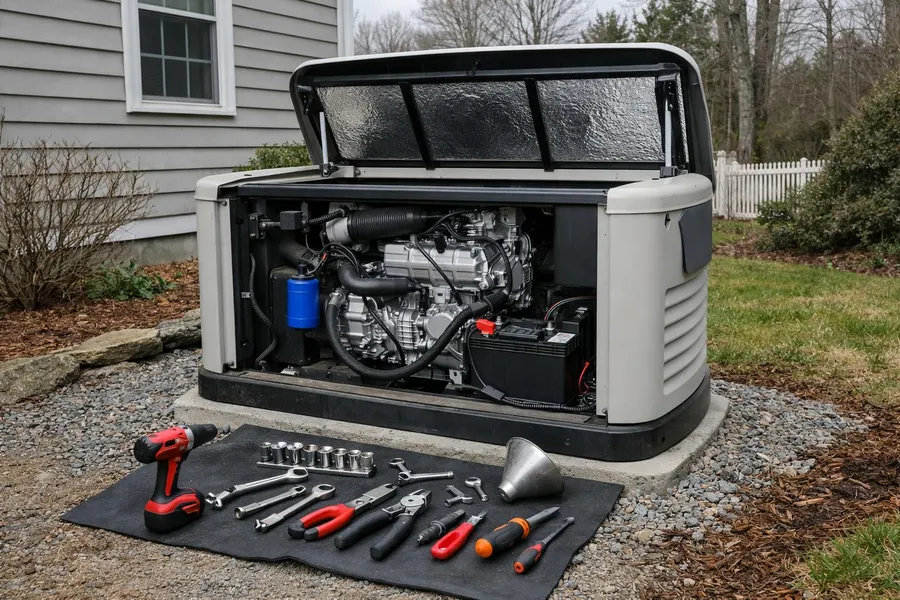
- If you have a standby generator, make sure it has been serviced and its weekly exercise is running.
During an outage
- Keep refrigerator and freezer doors closed (Ready.gov).
- Run portable generators outdoors only, at least 20 feet from the home (CPSC).
- Never use a gas stove or oven to heat the house (Ready.gov).
- Never plug a generator into a wall outlet.
After
- Ready.gov advises throwing out refrigerated food that has been above 40°F for 2 hours or more.
- If your standby generator ran for a long time, have it checked. See generator maintenance.
Get a free quote
If you would like a local pro to take a look, use the form on this page. It is free to ask and there is no obligation. Related: Generator Maintenance & Repair, Standby Generator Installation, Transfer Switch Installation.