Updated November 1, 2026. General information only, not legal, engineering, or insurance advice.
The short version
- Portable: lower upfront cost, gasoline fueled, you set it up by hand each time, and it must run outdoors well away from the house.
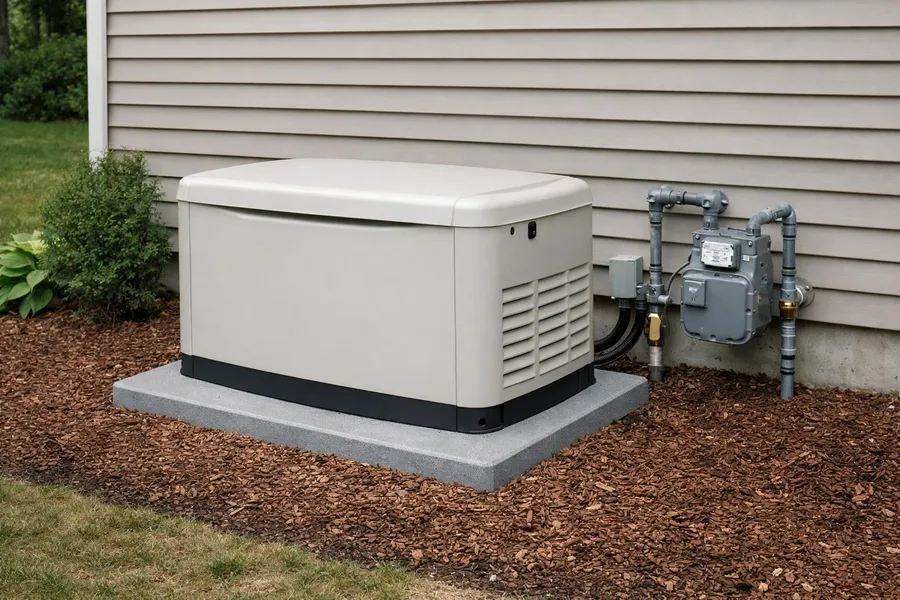
- Standby: permanently installed outside, runs on natural gas or propane, starts on its own through an automatic transfer switch.
Carbon monoxide is the big risk with portables
CPSC estimates about 85 U.S. consumers die each year from CO poisoning from gasoline-powered portable generators, and 81% of those deaths occur at homes. Its rules of thumb: outdoors only, at least 20 feet from the house, exhaust pointed away, and working CO alarms on every level.
Either way, connect through a transfer switch
OSHA says generators should only be connected to a building's wiring through a transfer switch installed by a qualified electrician. Plugging into an outlet ("backfeeding") can electrocute utility workers. See transfer switch installation.
Who does the work in Massachusetts
Electrical work requires a licensed electrician, and gas piping a licensed plumber or gas fitter, each with a permit. You can look up both license types on Mass.gov. When comparing quotes, ask whether permits, the pad, the transfer switch and the gas line are all included.
Get a free quote
If you would like a local pro to take a look, use the form on this page. It is free to ask and there is no obligation. Related: Standby Generator Installation, Transfer Switch Installation, Generator Gas & Propane Hookup.