Standby Generator Installation in Wilmington, MA
A standby generator is installed permanently outside the house, wired through a transfer switch, and fueled by natural gas or propane. When the grid fails it starts on its own within seconds. Tell us about your home and an independent local installer can quote a system sized to what you want to keep running.
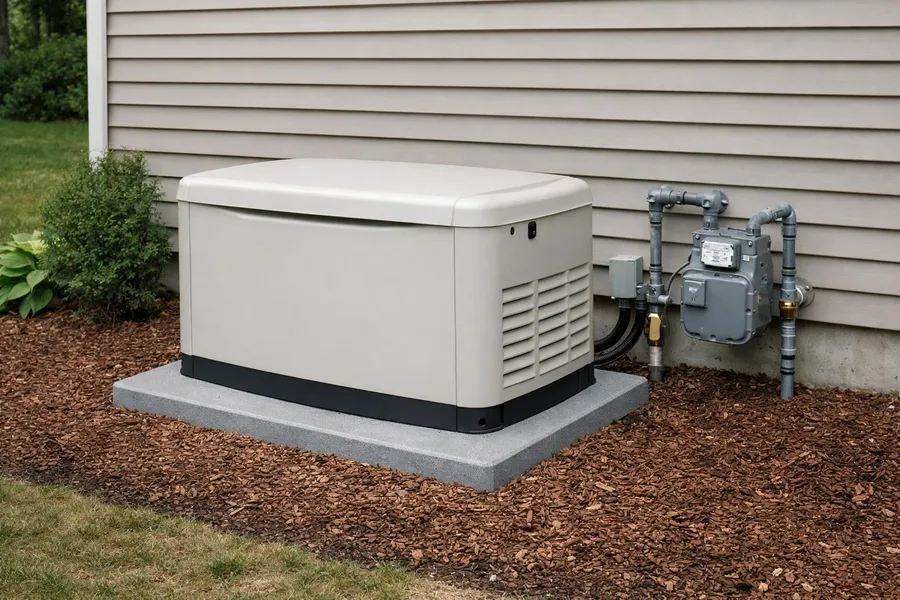
generator installation in Wilmington: what to know
The median home in Wilmington was built around 1979, and about 29% were built before 1960, so many electrical panels have been upgraded piecemeal over the years.
If your home in Wilmington already has natural gas service, the generator can usually run off it, but the meter and piping must be sized for the added load. Homes without gas service typically use a propane tank.
Wilmington housing snapshot
Source: U.S. Census Bureau, American Community Survey 2020–2024 5-year estimates, via Census Reporter.
What the job involves
- Site visit and load calculation. The installer looks at your electrical panel, gas or propane supply and possible pad locations, and works out what size unit you need.
- Permits. A licensed electrician and licensed gas fitter file for the electrical and gas permits. Some towns also check zoning setbacks.
- Pad, unit and transfer switch. The generator is set on a pad outdoors with the manufacturer's clearances, then wired to an automatic transfer switch and connected to fuel.
- Inspection and startup. Town inspectors sign off, the installer tests the system under load and sets up the automatic weekly exercise cycle.
When this makes sense
- Your heat, well pump or sump pump stops whenever the power goes out
- Someone in the home depends on powered medical equipment
- You are tired of running a portable generator and extension cords in a storm
- You work from home and need power and internet during outages
- You already have natural gas service or a propane tank
Why generator safety matters
CPSC estimates about 85 people die each year from portable generator carbon monoxide, most at home. A permanently installed standby generator with a transfer switch removes gas cans, cords and backfeeding from the picture.
Sources: CPSC: Generator safety and carbon monoxide deaths · CPSC: Portable generator safety alert (PDF) · OSHA: Using portable generators safely (PDF) · Ready.gov: Power outages (including generator safety)
Wilmington at a glance
Wilmington is served by the Reading Municipal Light Department (RMLD).
Ask your utility how to report an outage and whether it notifies customers of planned shutoffs.
The median home in Wilmington was built around 1979, and about 29% of homes date from before 1960.
Helpful resources: CPSC: Generator safety and carbon monoxide deaths · Ready.gov: Power outages (including generator safety)
Generator Installation in Wilmington: FAQ
Do I need a permit for a standby generator in Wilmington?
Expect at least an electrical permit and a gas permit, and some towns also review placement under zoning setbacks. In Massachusetts the licensed electrician and the licensed gas fitter pull their own permits. Ask the Wilmington building department what applies to your lot, and confirm in writing that your installer handles permits and inspections.
What size generator does a typical Wilmington home need?
It depends on what you want to run, not on the house alone. Well pumps, central air, electric ranges and older motors can change the answer. A good installer does a load calculation in your Wilmington home before quoting a size.
Standby or portable generator?
A portable generator is cheaper but has to be wheeled out, fueled with gasoline and connected by hand, and CPSC warns it must run outdoors at least 20 feet from the house. A standby unit is permanently installed, starts automatically, and runs on gas or propane.
How long does installation take?
The physical installation is often a day or two. Permits, equipment availability and inspections usually set the overall timeline, so ask each installer for their current lead time.