Transfer Switch Installation in Lynn, MA
A transfer switch is what makes a generator safe to connect to your house wiring. It disconnects the house from the utility before the generator powers it, so electricity cannot flow back onto the street lines. We connect you with independent local electricians who install automatic switches for standby units and manual switches or interlocks for portable generators.
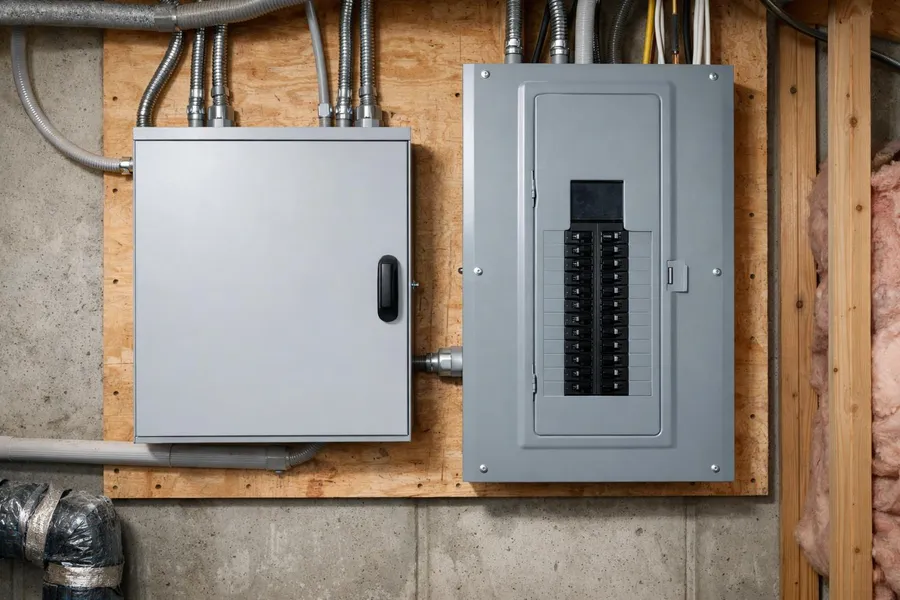
transfer switches in Lynn: what to know
The median home in Lynn was built around 1946, and about 63% were built before 1960, so many electrical panels have been upgraded piecemeal over the years.
Older panels in Lynn homes sometimes need to be replaced or reorganized before a transfer switch is added. Ask for that to be priced separately so you can compare quotes.
Lynn housing snapshot
Source: U.S. Census Bureau, American Community Survey 2020–2024 5-year estimates, via Census Reporter.
What the job involves
- Panel review. The electrician checks the main panel, service size and which circuits you want backed up.
- Choose the switch. Standby units use an automatic transfer switch. Portable units typically use a manual switch or a listed panel interlock with an inlet box.
- Permit and install. A licensed electrician pulls the electrical permit and installs the switch and wiring.
- Inspect and test. The wiring inspector signs off and the switch is tested so you know how it works before the next storm.
When this makes sense
- You plan to install a standby generator
- You own a portable generator and run extension cords during outages
- Someone has suggested a "backfeed" cord. Do not use one.
- Your panel is full or old and may need work before a generator is added
- You want only certain circuits (heat, fridge, sump) on backup power
Why generator safety matters
CPSC estimates about 85 people die each year from portable generator carbon monoxide, most at home. A permanently installed standby generator with a transfer switch removes gas cans, cords and backfeeding from the picture.
Sources: CPSC: Generator safety and carbon monoxide deaths · CPSC: Portable generator safety alert (PDF) · OSHA: Using portable generators safely (PDF) · Ready.gov: Power outages (including generator safety)
Lynn at a glance
Lynn homes depend on the regional grid, and nor'easters and summer storms can cause outages lasting hours or days.
The median home in Lynn was built around 1946, and about 63% of homes date from before 1960.
Helpful resources: CPSC: Generator safety and carbon monoxide deaths · Ready.gov: Power outages (including generator safety)
Transfer Switches in Lynn: FAQ
Do I need a permit for a standby generator in Lynn?
Expect at least an electrical permit and a gas permit, and some towns also review placement under zoning setbacks. In Massachusetts the licensed electrician and the licensed gas fitter pull their own permits. Ask the Lynn building department what applies to your lot, and confirm in writing that your installer handles permits and inspections.
How long does a transfer switch install take in Lynn?
The wiring itself is often a single day. Scheduling the permit and the inspection usually takes longer.
Why can't I just plug my generator into an outlet?
That is called backfeeding. CPSC calls it extremely dangerous: it can electrocute utility workers and neighbors on the same transformer and bypasses household circuit protection. OSHA says a generator should only be connected to a building's wiring through a transfer switch installed by a qualified electrician.
Automatic or manual?
Automatic switches sense an outage and start a standby generator by themselves. Manual switches are used with portable generators and require you to start the generator and flip the switch.